
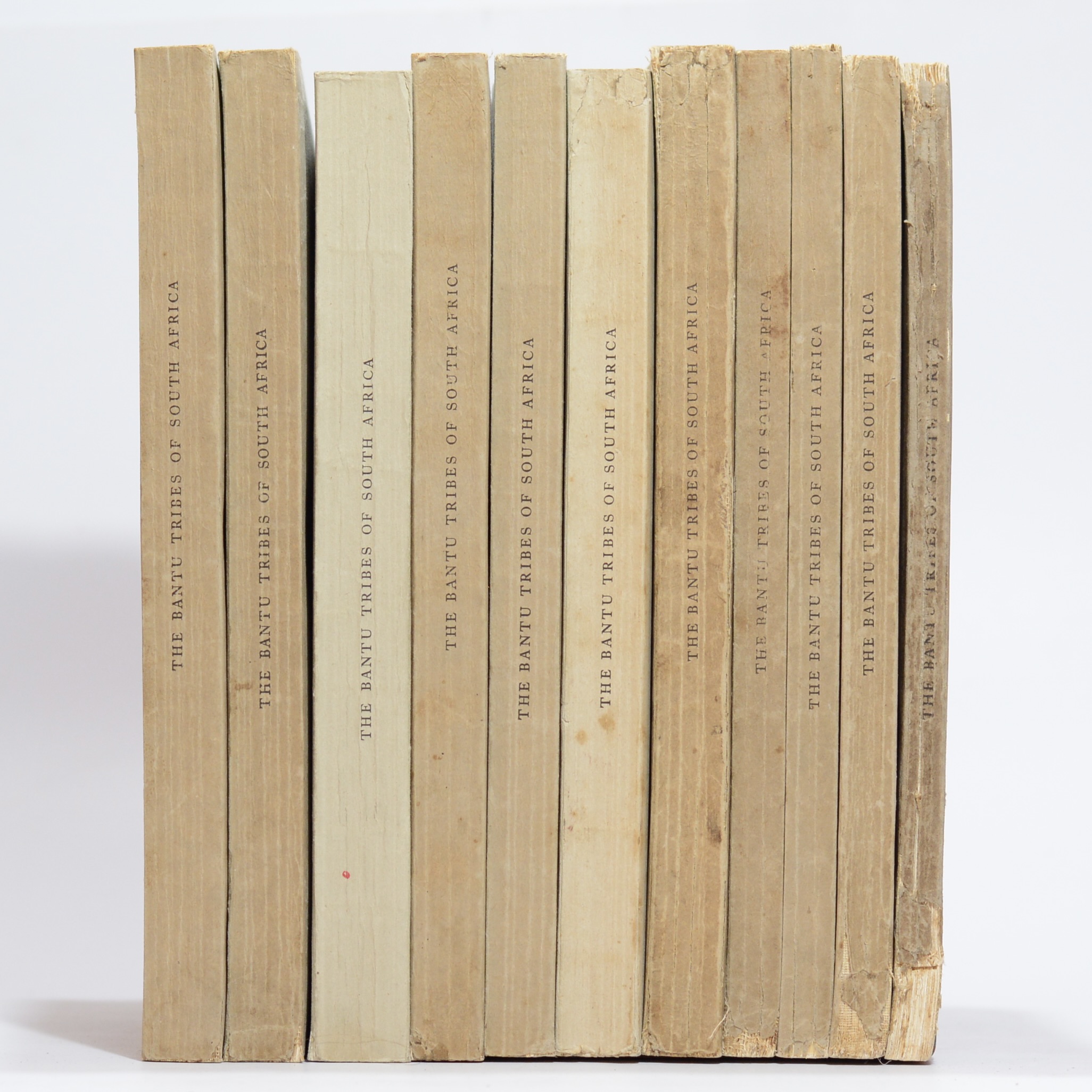
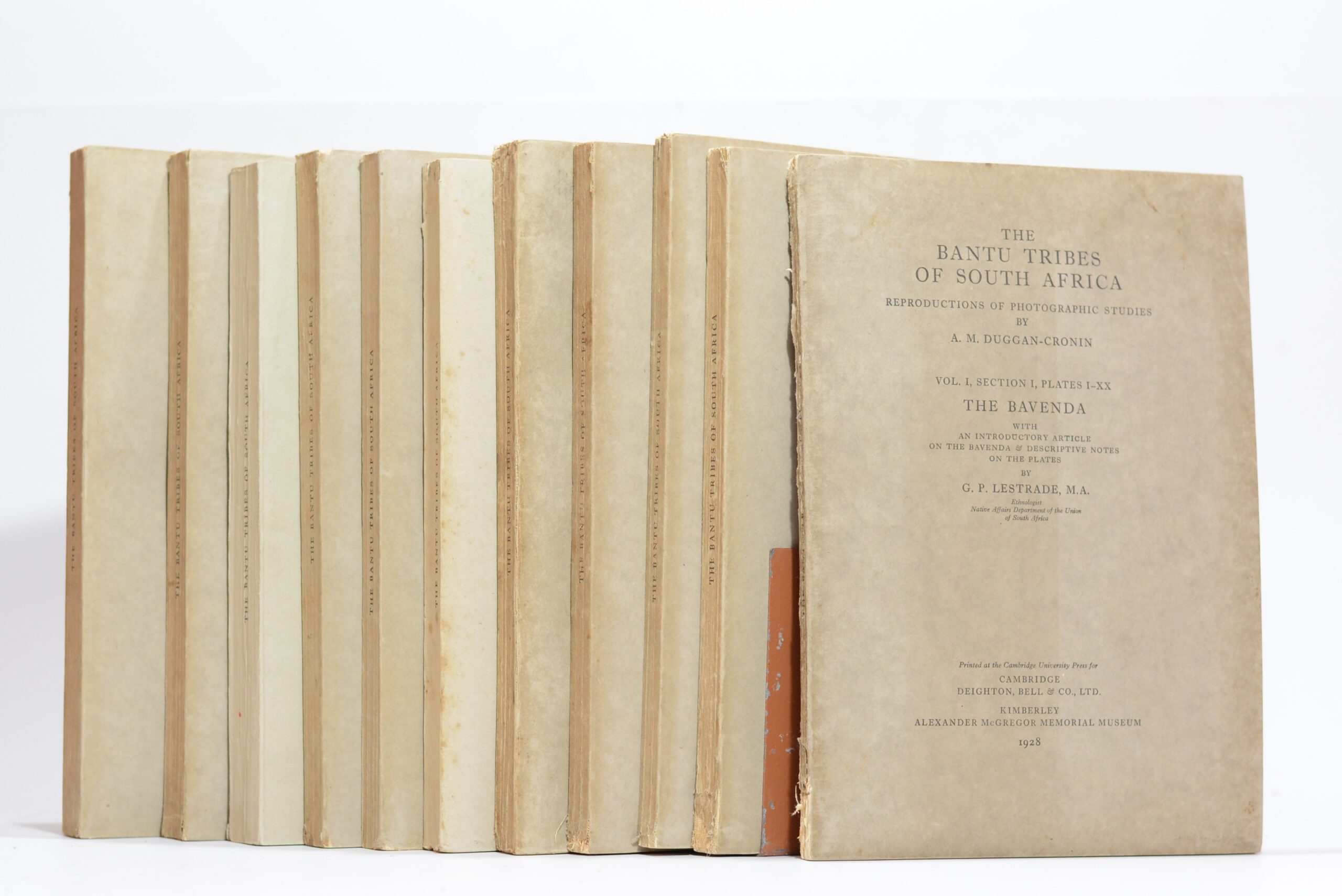
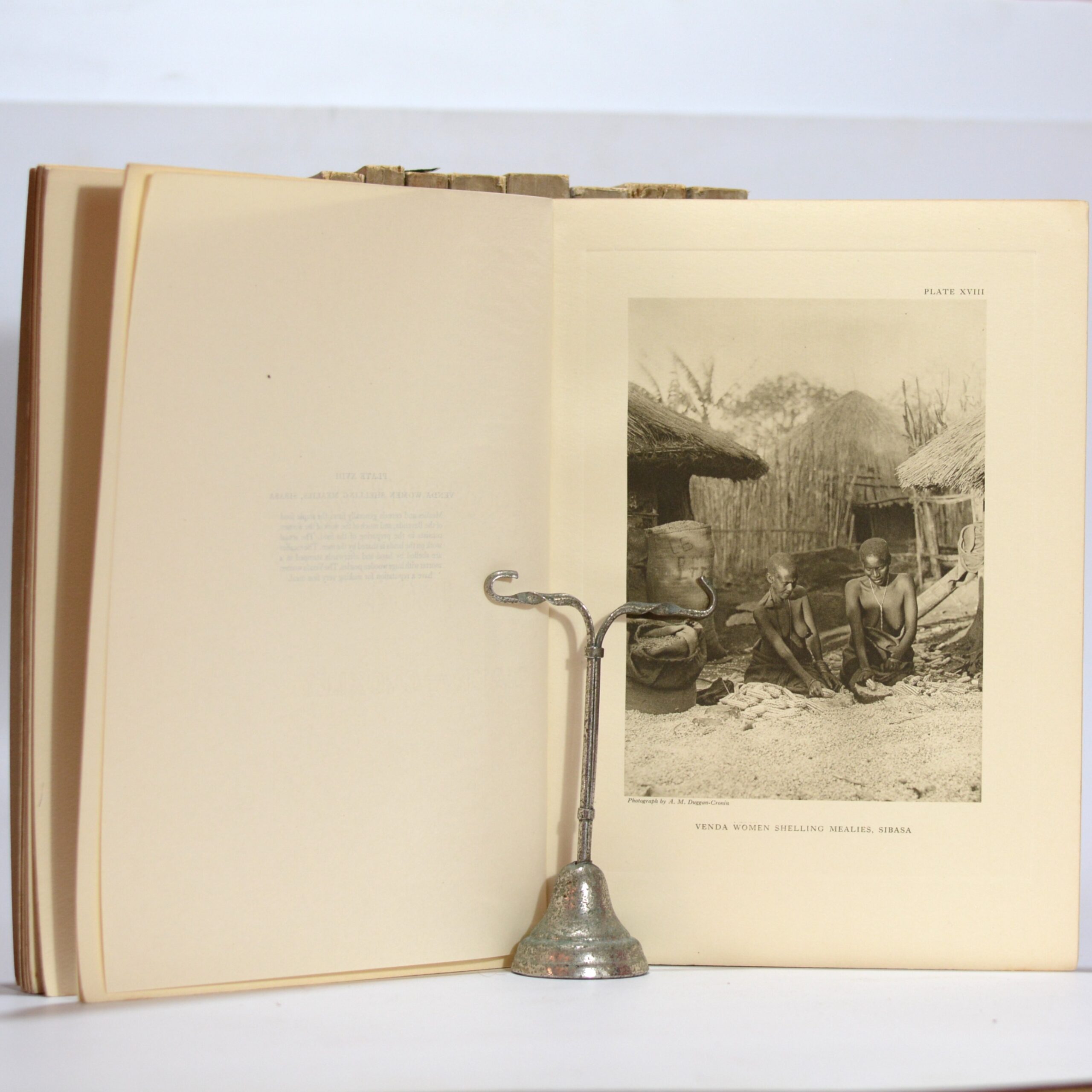
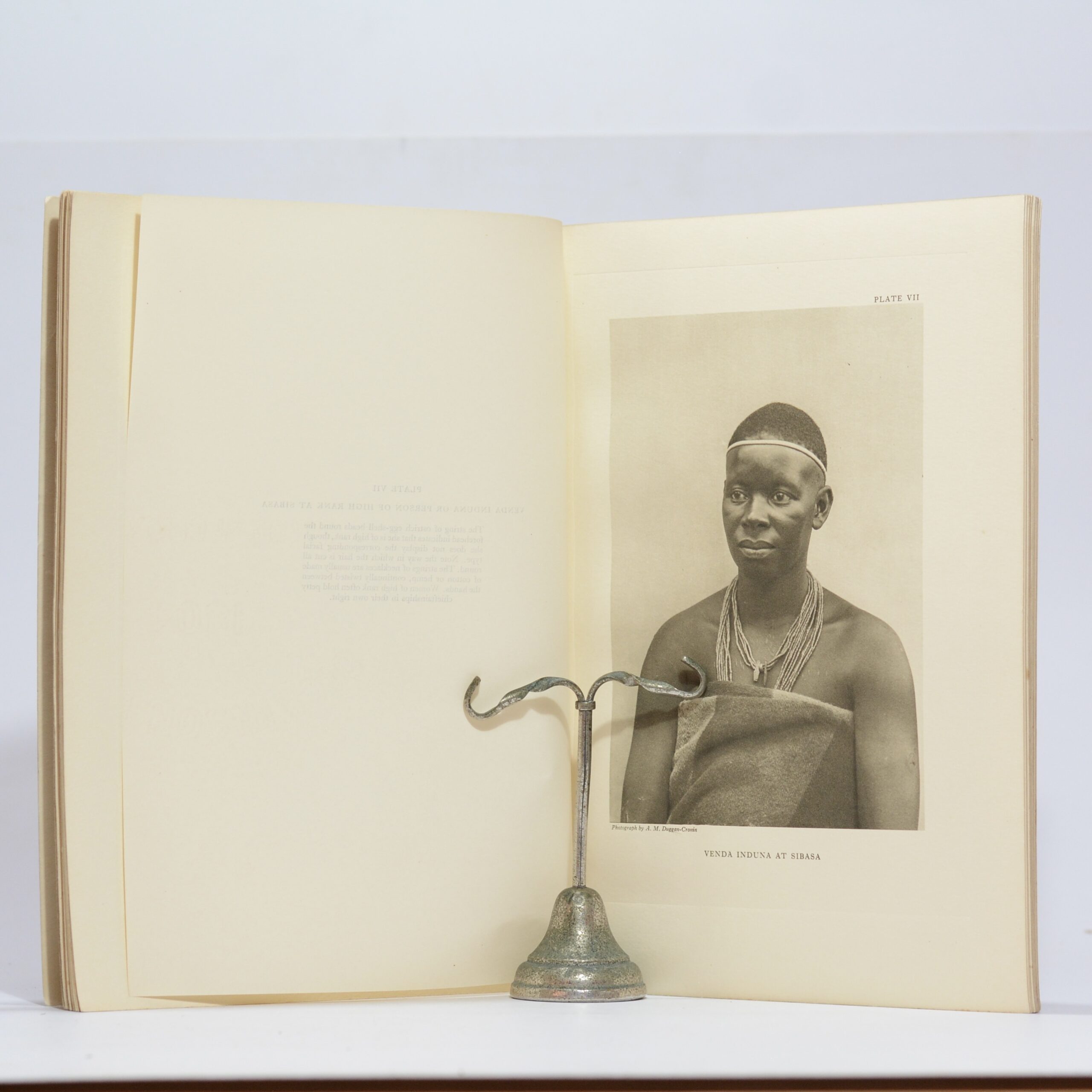
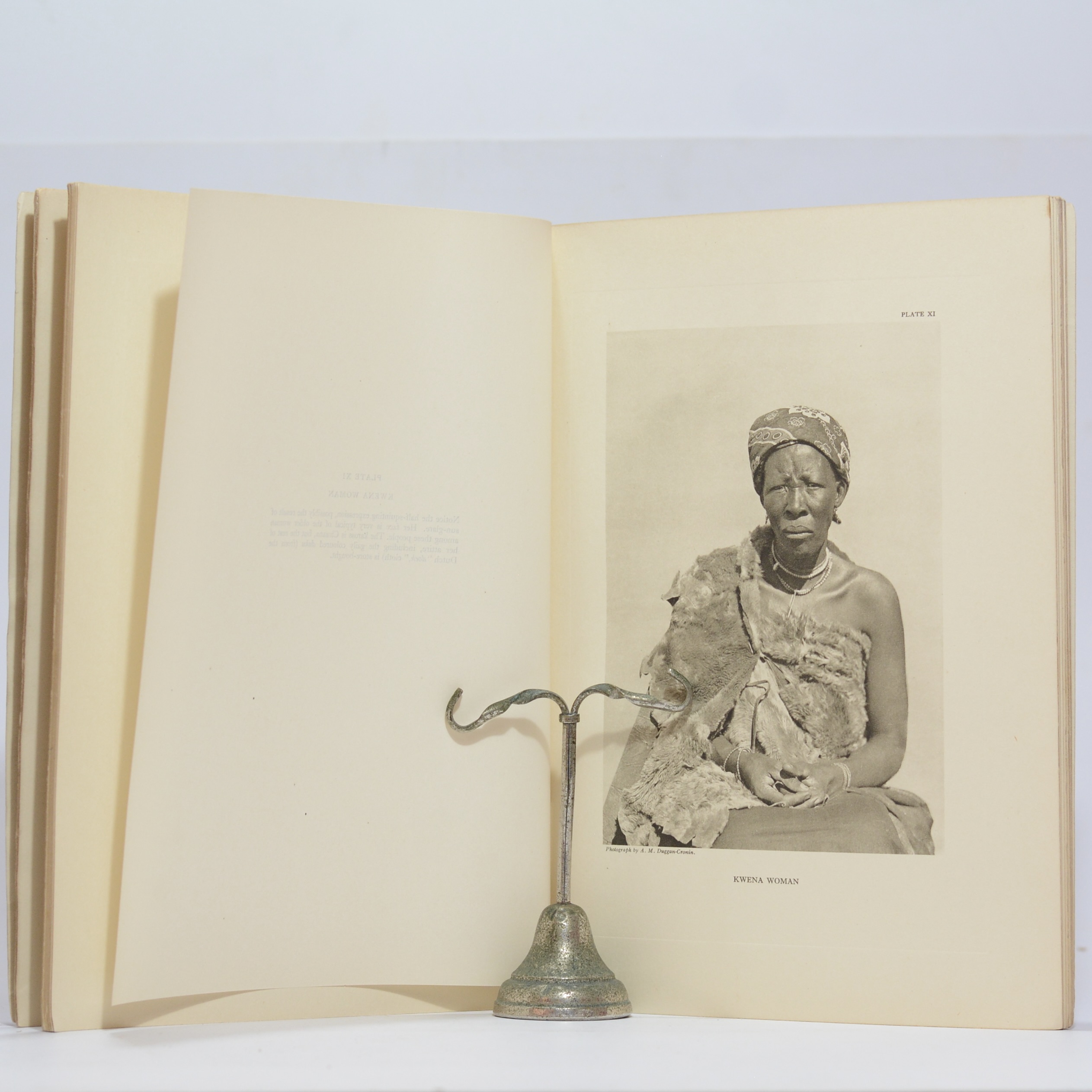
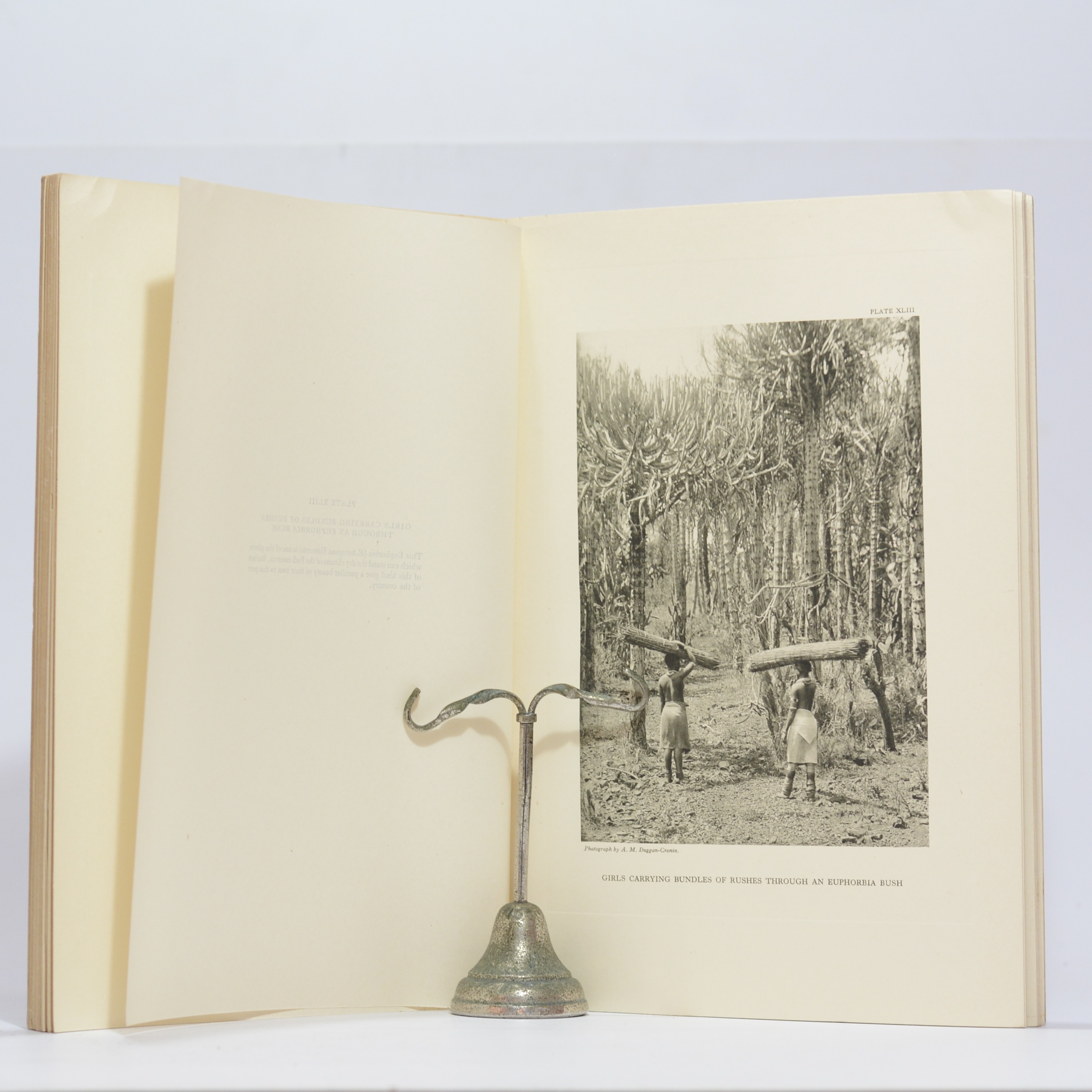
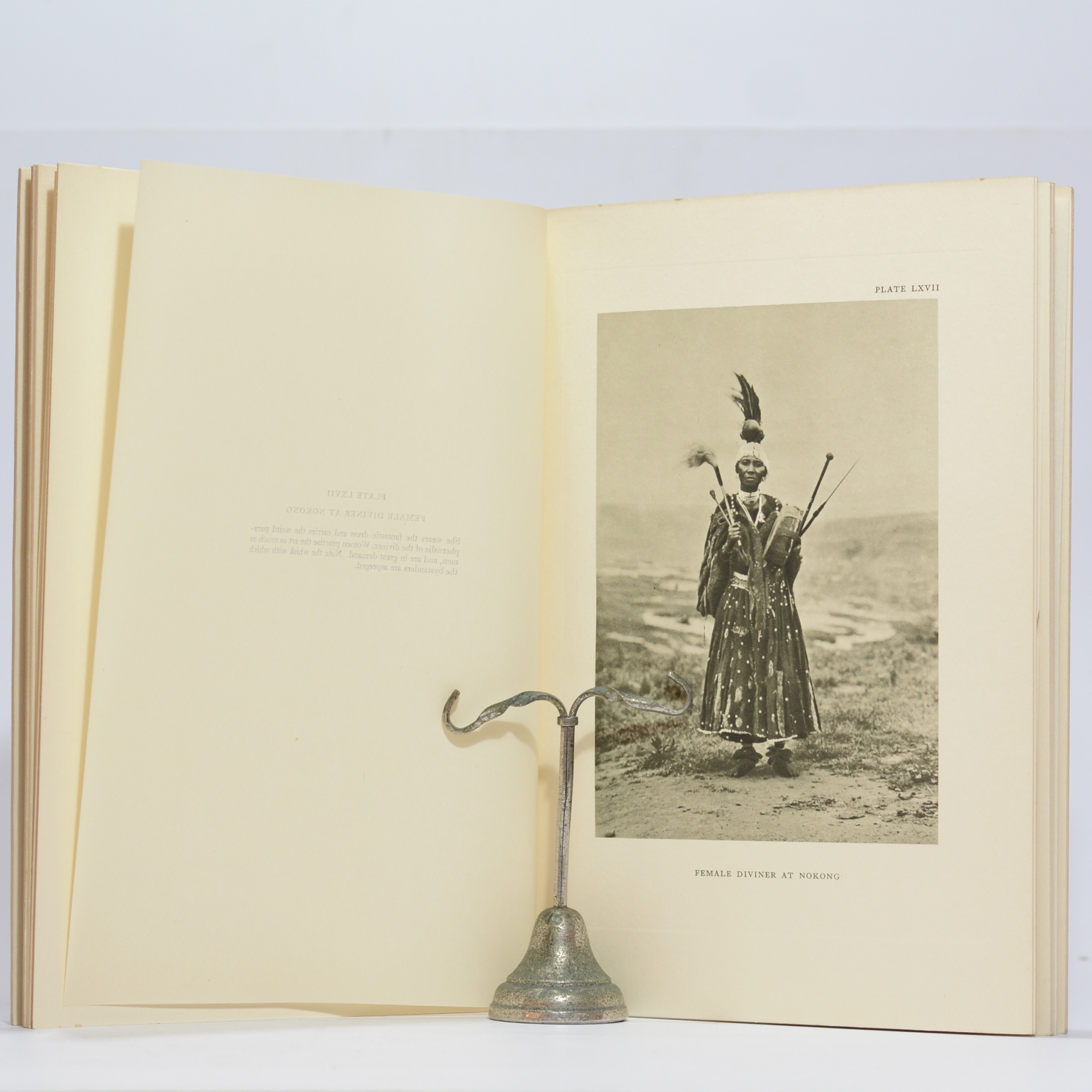
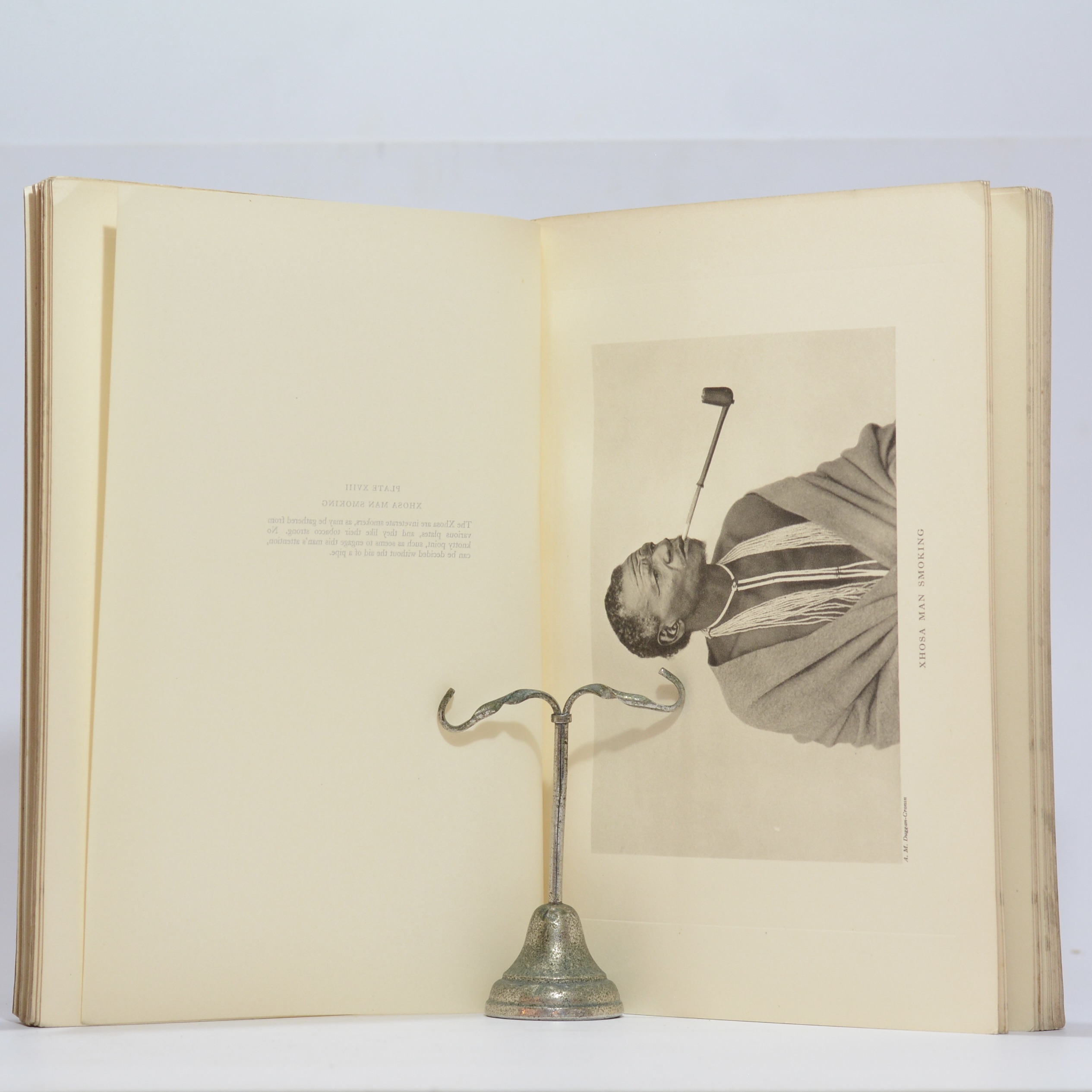
The Bantu Tribes of South Africa – Reproductions of Photographic Plates – Duggan-Cronin, A.M. (photog.), Lestrade, G.P., Eiselen, Junod, Malcolm, Bennie, Beemer, Wilson, Hammond-Tooke
$3,891.38
If you would like to collect this book from the shop in Kalk Bay, please email or phone us to make arrangements.
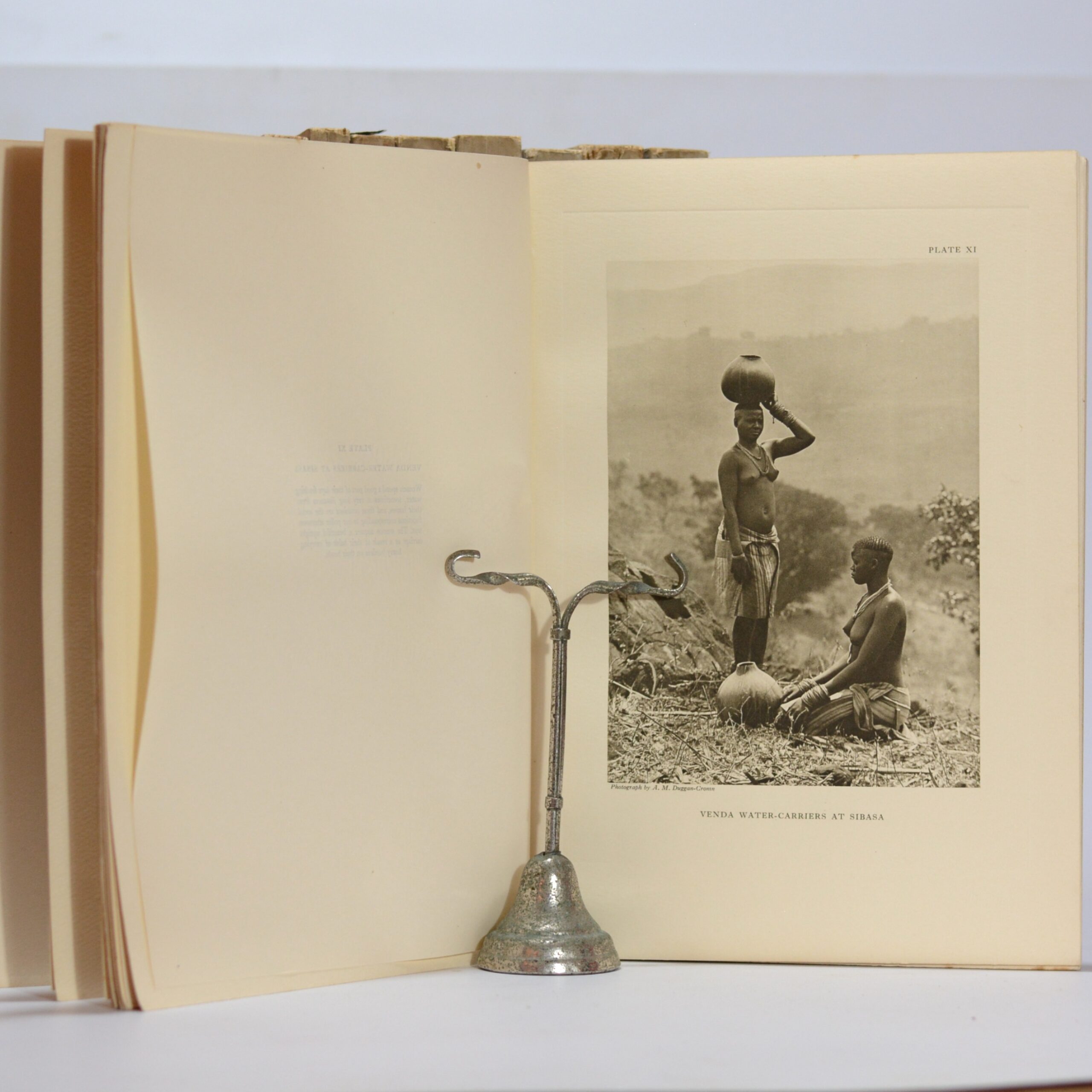
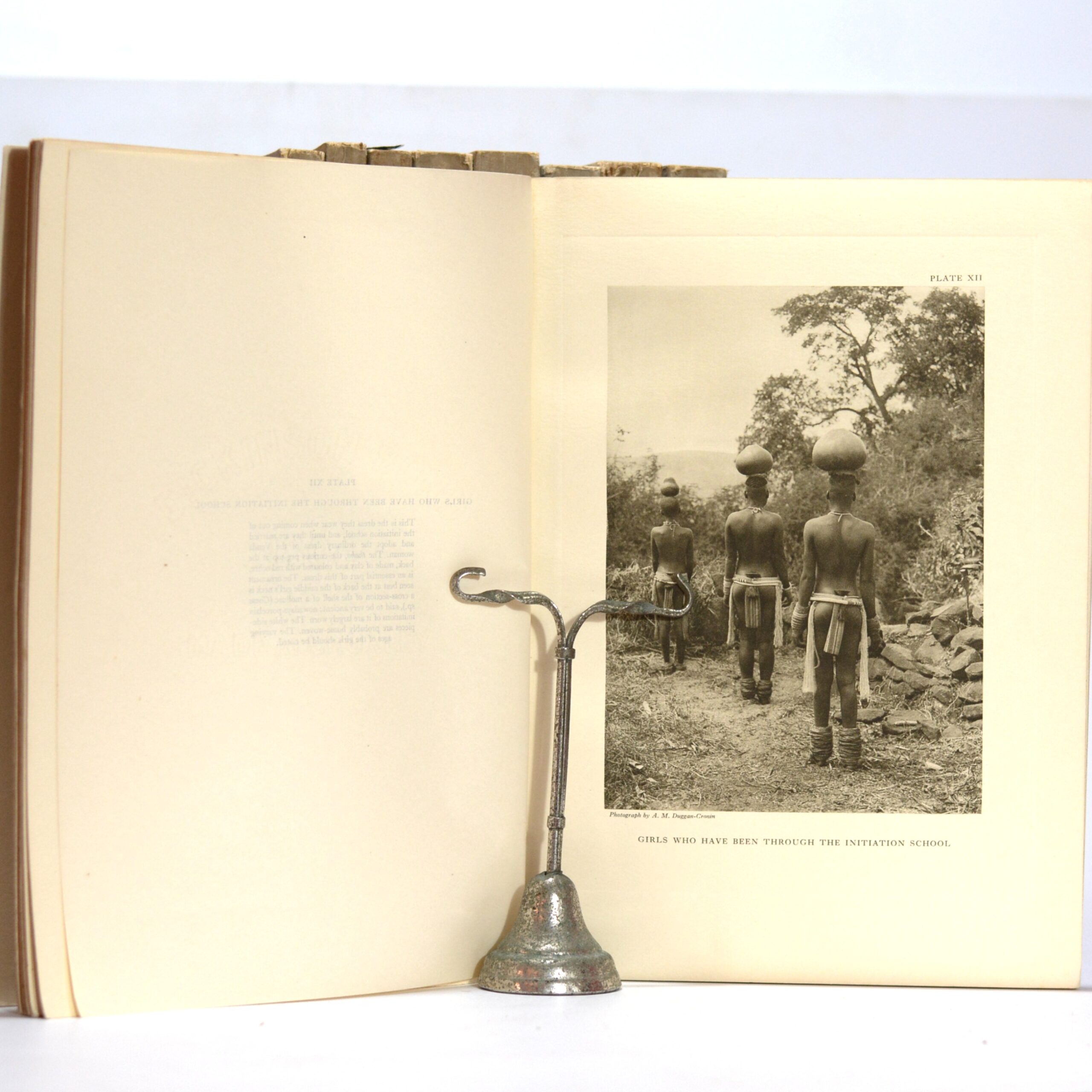
A complete set of 4 volumes in 11, with 376 collotype plates. Vol. I, one section – The Bavenda, plates I-XX, text by G.P. Lestrade Vol. II, three sections, The Sutho-Chuana Tribes, plates I-XXVI, text by G.P. Lestrade and I. Shapera. Vol. III, five sections, The Nguni, plates I-CXCVIII, text by Bennie, Wilson, Malcolm, Beemer and Hammond-Tooke. Vol. IV, two sections, plates I-LXXX, text by Junod, H. This photographic and ethnographic record of southern Africa can be seen as one of the most ambitious documentary projects of the early twentieth century. Produced over three decades, The Bantu Tribes of South Africa presents hundreds of superb collotype plates documenting the landscapes, material culture, and people of southern Africa at a moment of profound political and social transformation. Duggan-Cronin (18741954), an Irish-born photographer employed by De Beers in Kimberley, began photographing African migrant workers in the early 1900s. Encouraged by Maria Wilman of the Alexander McGregor Memorial Museum, and later supported by the Carnegie Trust and government grants, he undertook extensive expeditions between 1919 and 1939, travelling more than 128,000 kilometres across South Africa and into present-day Namibia, Botswana, Zimbabwe, Zambia, Mozambique, Swaziland, and Lesotho. Working under arduous conditions and developing glass plates in the field, he produced thousands of negatives from which this series was distilled. The eleven volumes encompass portraits of chiefs, families, women and children, hunters, herdsmen, and artisans, alongside carefully composed studies of dress, adornment, architecture, and landscape. Duggan-Cronin meticulously recorded dates, locations, and genealogical details, often sharing finished prints with his subjects. The platesprotected by captioned tissue guardsare accompanied by introductions, situating the images within contemporary anthropological thought. Seen in a modern context, this powerful and complex work reflects the tensions of its colonial past: at once an attempt to preserve what Duggan-Cronin believed to be “fast-disappearing” ways of life, and an artifact shaped by the racial and political ideologies of its time. An indispensable record, both as a visual archive and as a document of early twentieth-century ethnographic practice. Frequently compared to Edward Curtis’s work in North America, Duggan-Cronin’s achievement remains foundational in the history of African photography. Complete sets are increasingly scarce. Condition: Very good. Age toning to some of the wraps, particularly vol.I, section I. Some splitting at the heads and feet of the spines of 5 volumes and a little edge wear to the card wraps. Stamp removed from the front wrap of vol.II section I, a 1cm short tear to the bottom edge of vol.III, section I. Binding: Card wraps.
Publisher: Deighton, Bell / Alexander McGregor Memorial Museum
Date Published: 1929
Publication Place: Cambridge / Kimberley
Condition: Very good.
Binding: Softcover.
Dimensions: 21.3 x 29cm
You Might Also Like
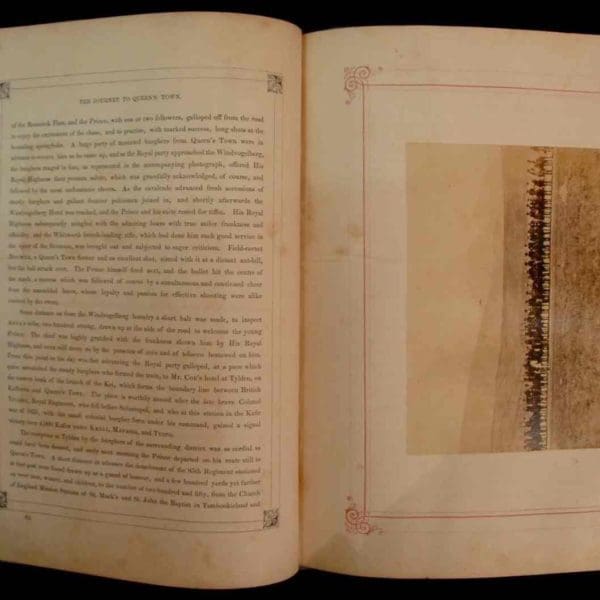
The Progress of Prince Alfred through South Africa 1860 – Prince Albert, consort
$566.02
Add to basket
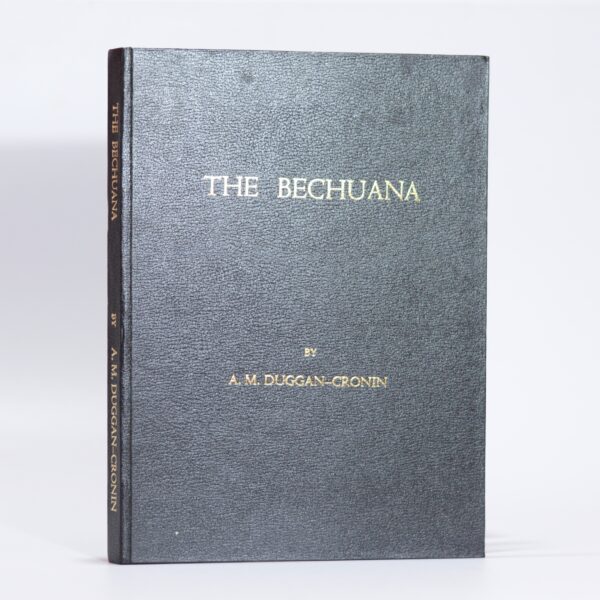
The Bantu Tribes of South Africa. – Duggan-Cronin, A.M. (photog.), Lestrade, G.P.
$183.96
Add to basket

The Borders of Apartheid. A Chronicle of Alienation in South Africa with a Portfolio of Photographs on Bophuthatswana Today – Alberts, Paul
$169.81
Add to basket